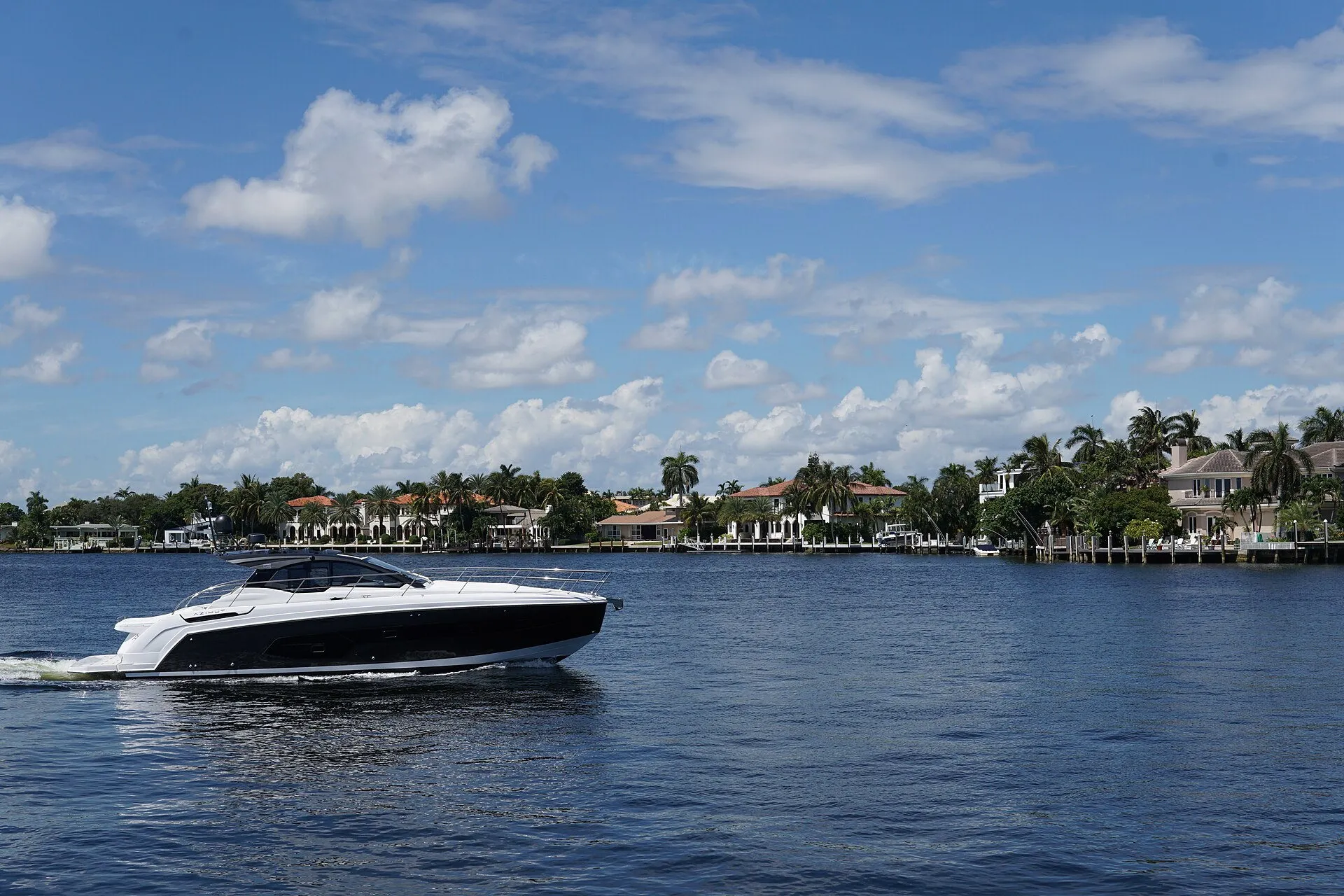
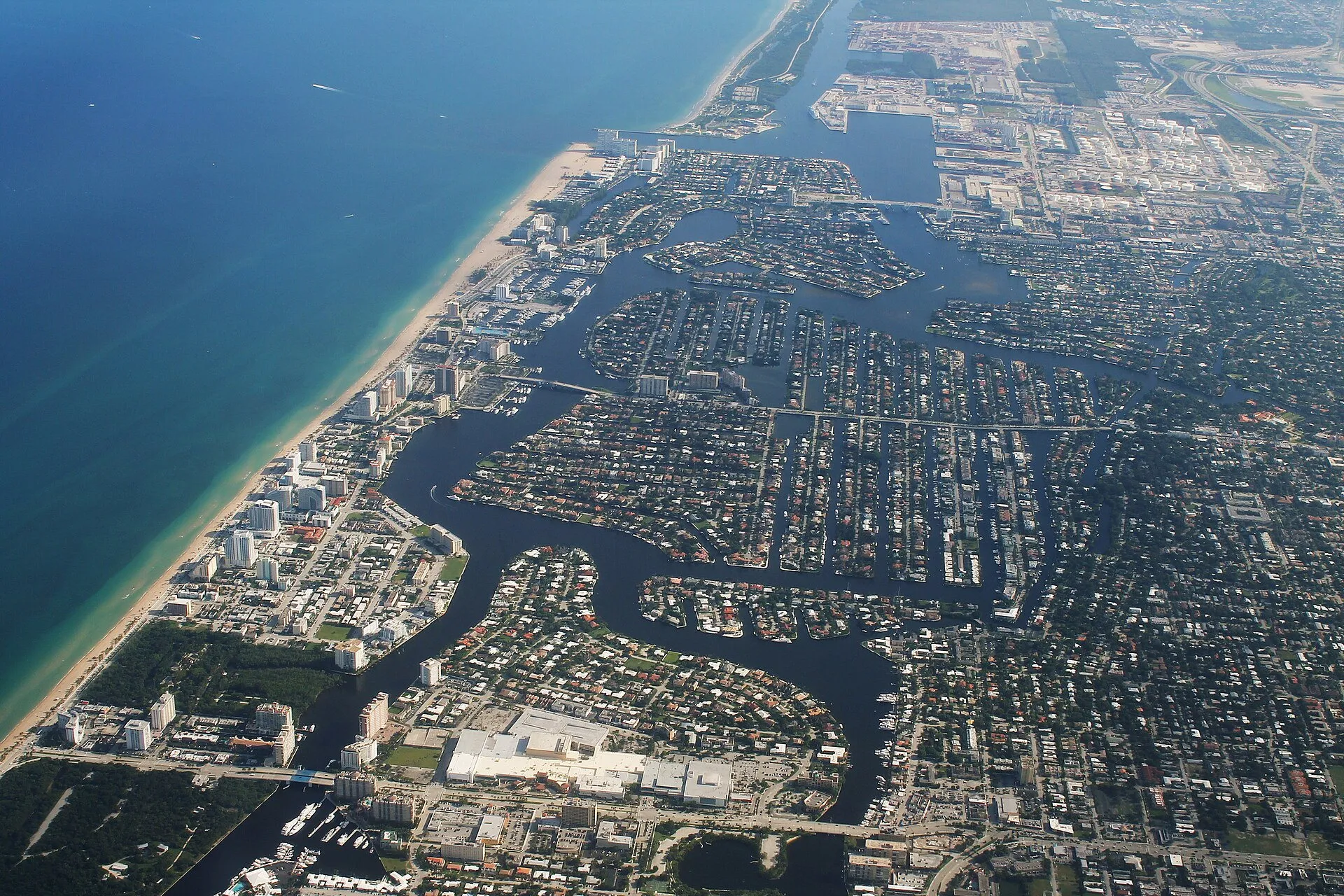
Jacksonville Dock Builder serves Palm Coast and Flagler County, building and repairing docks and boat lifts along the extensive saltwater canal network, the Intracoastal Waterway and the Matanzas River frontage.
The saltwater canal network · Intracoastal Waterway · Matanzas River · Freshwater lakes and ponds
ZIP codes served
32137 · 32164 · 32110 · 32136
Local water
The waterways we build on around Palm Coast
No two shorelines in Northeast Florida behave the same way. These are the conditions we design around here.
The saltwater canal network
Palm Coast's defining feature — a large network of dredged, bulkheaded saltwater canals connecting to the Intracoastal. Depth at the seawall is usually workable, so design is governed by canal width, projection limits and clearance from neighbouring riparian lines.
Intracoastal Waterway
Direct frontage with good depth and steady traffic. Wake is a persistent design load and tie-up faces need proper fendering.
Matanzas River
The northern reach of the waterway toward the inlet, with stronger current, marsh edges and more variable conditions than the canals.
Freshwater lakes and ponds
Many inland Palm Coast properties front non-tidal water. These are deck and small-platform projects rather than marine construction.
A city built around canals
Palm Coast’s waterfront is unlike anywhere else in our service area. Instead of a river shoreline or a marsh edge, most of it is a dredged, bulkheaded canal system running back from the Intracoastal — tens of miles of it, with homes on both banks.
That changes the engineering problem entirely. On the St. Johns or behind Amelia Island, the question is how far you must build to reach water. On a Palm Coast canal, the water is right at your seawall and plenty deep enough. The question is how much of the canal you are allowed to occupy.
Projection limits, and why they decide the design
Canals have to stay navigable, so local rules limit how far a structure may extend from the bulkhead. The specific allowance depends on where you are, and canal widths vary across the network.
Practically, this means that on a wide canal you may have room for a walkway, a terminal platform and a lift. On a narrow one you may have to choose between a lift and a platform, or build a structure that sits tight to the seawall.
It is not a constraint to be worked around after the design is done. It is the frame the design has to fit inside, and establishing the number for your specific canal is step one.
The seawall question
Nearly every canal dock interacts with a bulkhead, and the condition of that bulkhead deserves honest assessment before anything new is built in front of it.
Seawalls fail gradually and then quickly. The early signs are soil disappearing from behind the cap, panels beginning to lean, cracking at joints, and water finding its way through. A dock built in front of a wall in that condition is a structure that will have to be worked around — or partially removed — when the wall is eventually replaced.
If your bulkhead is showing those signs, we will tell you, and we will recommend sorting that out first. It is not the answer anyone wants, but it is far cheaper than the alternative sequence.
Working from the water
Canal lots typically have houses close together and narrow side yards, which rules out bringing pile-driving equipment through from the street on many properties.
Working from the water is routine here and perfectly straightforward, but it has to be planned — barge access, staging, and a route down the canal that does not obstruct neighbours. We establish this on the site visit and price it properly rather than treating it as an unknown.
Local conditions that shape the build
Canal geometry sets the design
On a bulkheaded canal the question is not how far out you must go to find water — it is how far you are permitted to go without narrowing the channel. Projection limits and side setbacks determine whether a terminal platform, a lift or both will fit.
Bulkhead and seawall condition
Canal docks attach to or sit immediately in front of a seawall, so the condition of that structure matters as much as the dock itself. A failing bulkhead behind a new dock is a problem deferred, not solved.
Salt water throughout the canal system
The canals are tidal and saline, so marine specification applies in full — borer-rated timber for anything submerged, and corrosion-resistant hardware.
Limited equipment access
Many canal lots have narrow side access between houses. Pile-driving equipment frequently has to come by water, which is routine but needs planning.
Permitting in Flagler County
Palm Coast projects typically require a City of Palm Coast or Flagler County permit depending on the address, alongside state environmental review and federal authorisation from the U.S. Army Corps of Engineers Jacksonville District where applicable. Canal properties are usually subject to specific local limits on how far a structure may project from the bulkhead. We confirm the rules for your canal before design.
How far can a dock project into a Palm Coast canal?
There is a local limit, generally framed so that navigation down the centre of the canal stays clear, and it is the controlling constraint on most canal lots. Because canals here vary in width, the answer differs street to street. It is the first thing we check, because it determines whether a lift and a terminal platform can coexist or whether you have to choose.
Should I check my seawall before building a dock?
Yes, always. A dock built in front of a bulkhead that is nearing the end of its life creates a real problem, because replacing the seawall later usually means working through or around the new structure. If there are signs of a failing bulkhead — soil loss behind it, panels leaning, cracking at the cap — it is far better to deal with that first.
Is there enough depth at the seawall for a boat lift?
On most of the canal network, yes — the canals were dredged for navigation and depth near the bulkhead is generally workable. The constraint on a lift here is usually width rather than depth, since a lift occupies canal space and has to stay inside the projection limit.
Do Palm Coast canals have the same corrosion issues as open coast?
The water is saline and tidal, so marine borers and hardware corrosion both apply. The canals are sheltered from wave action and wind-driven spray, which helps, but the specification for anything submerged or in the splash zone should be the same as for open water.
Can you get equipment to a canal lot?
Usually by water, which is standard practice here. Narrow side yards between houses often rule out land access for pile-driving equipment. We establish the access route on the site visit so it is priced correctly rather than improvised.