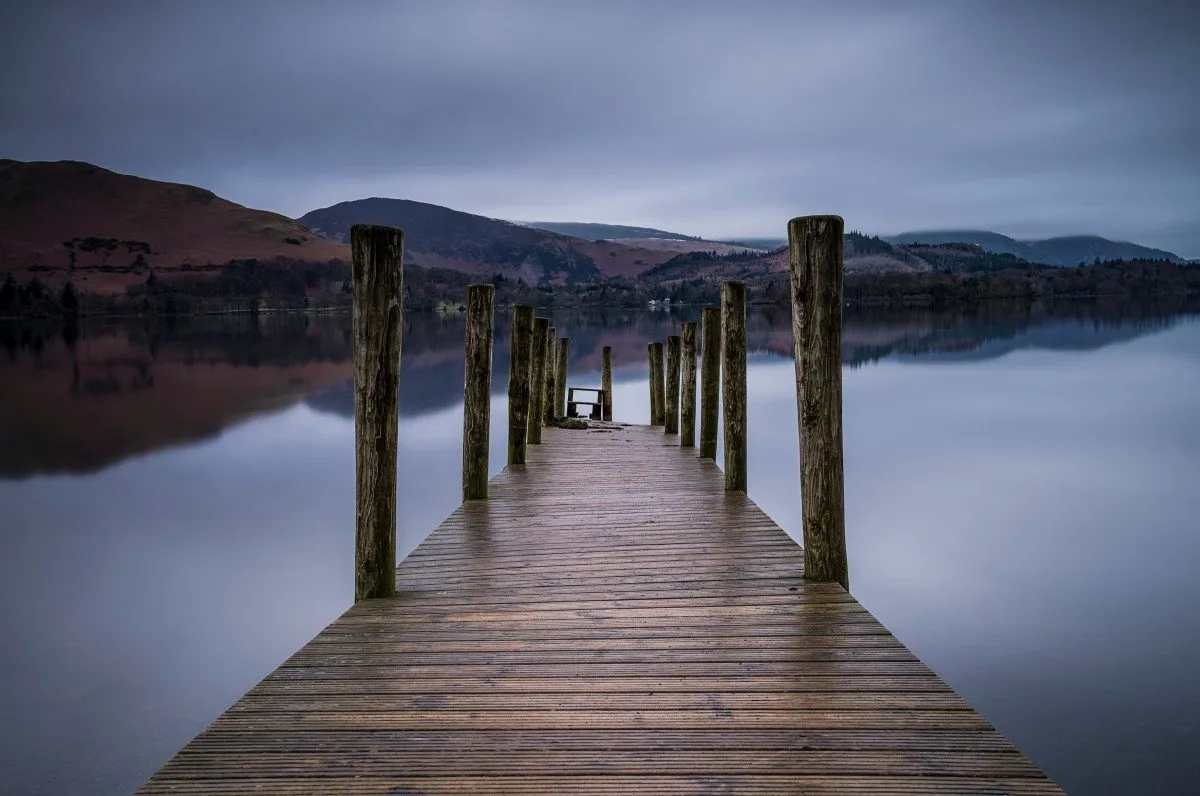
Timber dock pilings standing in dark still water beneath a low overcast sky

Putnam County · Northeast Florida

Dock Builder in Palatka, Florida

Jacksonville Dock Builder works throughout Palatka and Putnam County on the upper St. Johns River, Rice Creek and Dunns Creek — largely fresh-water conditions where rot, water-level variation and vegetation matter more than marine borers.

County

Putnam County

Primary waterways

St. Johns River (upper reach) · Rice Creek · Dunns Creek · Crescent Lake approaches

ZIP codes served

32177 · 32131 · 32148 · 32139 · 32112

Local water

The waterways we build on around Palatka

No two shorelines in Northeast Florida behave the same way. These are the conditions we design around here.

St. Johns River (upper reach)

Narrower here than downstream, with defined banks and reasonable depth closer to shore than in the wide Clay County reaches. Flow is southerly to northerly and water level responds noticeably to rainfall in the upper basin.

Rice Creek

A sheltered tributary west of the river with tannic water, soft banks and overhanging vegetation. Access is often the main constraint rather than depth.

Dunns Creek

Running south-east toward Crescent Lake, with quiet fresh water, shallow margins and good conditions for small-craft dockage.

Crescent Lake approaches

Broad, shallow lake water with long fetch in open stretches — more wind exposure than the river reaches despite being fresh water.

A different river this far upstream

By the time the St. Johns reaches Palatka it is a different waterway from the one at Jacksonville. It is narrower, the banks are better defined, the water is dark with tannin, and in most years the salt influence that governs construction downstream simply is not present.

That changes the priorities. The thing we design hardest against on the lower river — marine borers eating pilings from the inside — is largely absent. What replaces it is a set of fresh-water problems: rot in anything that stays damp without drying, water levels that move with rainfall as well as tide, floating vegetation accumulating against structures, and access through heavily wooded riverfront.

Rot does not need salt

It is worth being direct about this, because the absence of borers leads some owners to assume timber specification matters less here. It does not.

Fresh water decays wood thoroughly. Untreated or under-treated timber in contact with wet soil, or sitting in water, or holding moisture in a joint that cannot drain, fails on a predictable schedule regardless of salinity. Ground-contact rated material is still required where it is required, hardware still needs to be properly rated, and detailing that sheds water rather than trapping it still determines how long a structure lasts.

What genuinely does relax slightly is the preservative retention needed on permanently submerged pilings, and that is a real saving on a project with a lot of pilings.

Water level is a range, not a number

On the tidal lower river, you design around a predictable daily swing. Here you design around that plus seasonal variation driven by how much rain has fallen across a very large basin upstream.

A dock set to a comfortable height during a dry spring can sit noticeably low after a wet summer, and vice versa. The practical response is to establish the realistic range for your stretch — local knowledge and the marks on existing structures are both useful here — and set deck height so the dock works across it rather than optimising for the day we happened to visit.

Access is usually the hard part

Putnam County riverfront is wooded, and the lots are often deep with long drives and soft ground.

Getting a pile-driving rig to the water’s edge is frequently the single biggest practical question on a project here, and the answer determines the method and a meaningful share of the cost. Where land access does not work, we build from the water instead. That is entirely normal and we would rather establish it on the site visit than find out on the first morning.

Local conditions that shape the build

Fresh to very low salinity
Marine borers are not meaningfully a factor this far upriver in most years, which removes the single most aggressive threat to submerged timber. Rot, however, is entirely unaffected by the absence of salt.
Water level variation with rainfall
The upper St. Johns responds to rainfall in its basin, so water level here varies with the season and with wet or dry years as well as with tide. Dock height has to work across a wider range of normal conditions than tide alone would suggest.
Vegetation and floating plants
Water hyacinth and other floating vegetation accumulate against structures in the upper river. It is a maintenance consideration and it affects how a dock and a lift should be laid out.
Softer banks and tree cover
Heavily vegetated banks with mature trees. Good shelter from wind, but access for equipment is frequently the governing practical constraint.

Permitting in Putnam County

Putnam County building permits apply, alongside state environmental review through the St. Johns River Water Management District or the Florida Department of Environmental Protection, and federal authorisation from the U.S. Army Corps of Engineers Jacksonville District. Requirements differ from the lower river in detail, and we confirm the applicable path for your parcel.

Requirements change. Confirm current rules with the Florida Department of Environmental Protection, the St. Johns River Water Management District and the U.S. Army Corps of Engineers Jacksonville District, along with your local building department.

Palatka answers

Dock questions specific to Palatka

Do I still need marine-grade materials in fresh water?

You need correctly treated timber, but not necessarily to the same marine immersion retention required on the salt-influenced lower river. Marine borers are not a meaningful factor here in most years. What has not gone away is rot — fresh water decays untreated or under-treated timber perfectly efficiently, and ground-contact rated material is still required wherever timber meets soil or sits in water.

Why does the water level change so much?

The upper St. Johns responds to rainfall across its basin as well as to tidal influence, so the range of normal water levels here is wider than tide alone would produce. A wet season and a dry season can look quite different at the same dock. Structures are designed with that broader range in mind rather than to a single reference height.

Does water hyacinth cause problems for docks?

It is mostly a nuisance rather than a structural threat, but it is a real one. Floating vegetation accumulates against pilings and in the space under a dock, and it can make a lift awkward to operate and a slip difficult to get into. Layout can mitigate it — leaving the approach clear and avoiding geometry that traps drifting material.

Is dock construction cheaper in Palatka than downstream?

Sometimes, for two reasons. The river is narrower here so structures are often shorter than on the wide Clay County reaches, and the material specification can be slightly less demanding in genuinely fresh water. Working against that, access on heavily wooded riverfront lots can be difficult, and difficult access costs money. The site visit settles it.

Can you get equipment to a wooded riverfront lot?

Often, but it is the main practical question in Putnam County. Mature trees, soft ground and long driveways can all rule out land access. Where that is the case we work from the water, which is routine but needs planning and affects the price.

Start your project

Request an estimate in Palatka

Tell us the waterway, what is there now and what you would like. We will come back with a clear scope.

The more detail you give, the more accurate the first conversation will be.

Add measurements, budget, timing or photos
Preferred contact method
Photos of the site or existing structure

Up to three images or a PDF survey, 8 MB total. A shot of the shoreline and one of any existing structure help more than anything else you can send.

Or call (904) 821-5744

By sending this form you agree to be contacted about your project. Your details go to one marine contractor — they are never sold or shared with a lead network. See ourprivacy policy.