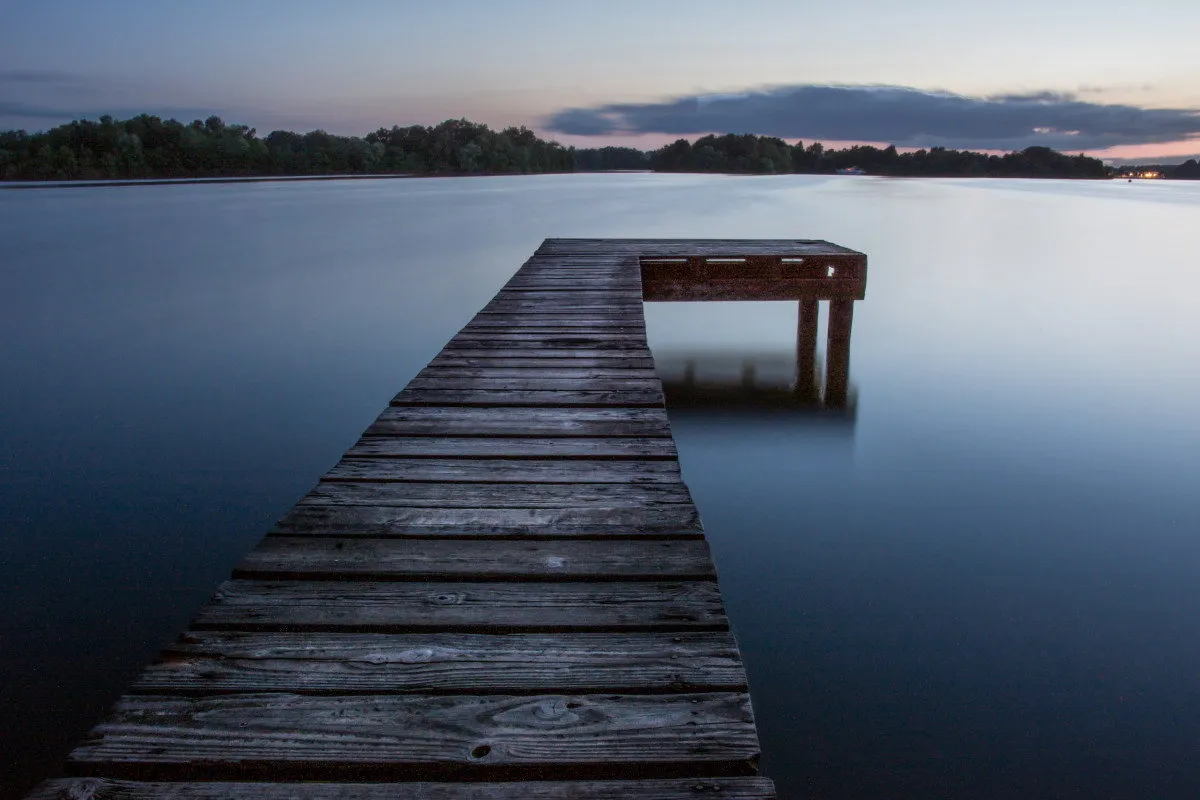

St. Johns River
Broad, shallow-shelving west-bank frontage with substantial wind fetch. Long structures are the norm, and framing needs to account for wave action rather than sheltered conditions.
Clay County · Northeast Florida
Jacksonville Dock Builder serves Orange Park and the northern Clay County waterfront — the St. Johns River west bank, Doctors Lake and Black Creek — with new dock construction, repairs, replacement and boat lift work.
County
Clay County
Primary waterways
St. Johns River · Doctors Lake · Black Creek · Governors Creek and smaller tributaries
ZIP codes served
32073 · 32065 · 32003
Local water
No two shorelines in Northeast Florida behave the same way. These are the conditions we design around here.
Broad, shallow-shelving west-bank frontage with substantial wind fetch. Long structures are the norm, and framing needs to account for wave action rather than sheltered conditions.
A large tidal lake with a long perimeter of residential waterfront. Sheltered compared to the open river, but with enough surface area to generate chop and with limited depth near much of the shoreline.
A tannic, largely fresh-water creek running south-west, well sheltered and with a quite different character from the main river. Lower corrosion pressure and no meaningful borer activity, but soft banks and variable depth.
Narrow sheltered creeks suiting small-craft access, floating platforms and kayak launches more than long fixed structures.
Orange Park’s waterfront neighbourhoods were established a long time ago, and a great many of the docks along the river, around Doctors Lake and up Black Creek were built in an earlier era of materials, hardware and expectations.
Those structures were often well made. What they were not built for is forty-plus years of tidal cycling, several hurricane seasons more than anyone planned on, modern boat weights, and the loads that come with a lift and a roof that were added later.
The result is that the bulk of what we do in Orange Park is assessment, repair and replacement rather than building on virgin frontage. That shapes how we start a conversation here: before quoting anything, we want to know what you actually have.
On an older structure, almost everything turns on the pilings.
A piling can look entirely sound from the deck and have lost most of its section below the waterline, or have lost embedment to decades of scour without visibly moving. Neither is obvious from the bank, and both mean that a new frame and new decking are being built on a foundation with a short remaining life.
The assessment is physical: get under the structure at low tide, probe the pilings at and below the waterline, check for movement, look at how the bottom sits around each one. It takes an hour and it determines whether you are facing a repair or a replacement — a difference measured in multiples, not percentages.
Orange Park is unusual in covering three meaningfully different water conditions within a short drive.
The St. Johns frontage is brackish, with salinity that varies seasonally. Build it as marine construction.
Doctors Lake is tidal and connected to the river, with similar but generally milder exposure. Marine specification still applies.
Black Creek is largely fresh and tannic. Borers are not the concern; rot and the correct treatment rating for water contact are.
Specifying all three the same way means either over-paying on the creek or under-building on the river. We match the specification to the water.
Orange Park projects generally require a Town of Orange Park or Clay County building permit depending on the address, together with state environmental review and federal authorisation from the U.S. Army Corps of Engineers Jacksonville District. Doctors Lake and Black Creek frontage can carry their own considerations. We confirm the applicable path for your parcel before design work begins.
Requirements change. Confirm current rules with the Florida Department of Environmental Protection, the St. Johns River Water Management District and the U.S. Army Corps of Engineers Jacksonville District, along with your local building department.
Orange Park answers
Yes. It connects to the St. Johns and rises and falls with it, so structures on the lake need to be designed for tidal range just as river-front structures do. What the lake gives you is shelter from the open-river wind fetch, which is a genuine advantage — but it is sheltered tidal water, not a pond.
It depends almost entirely on the pilings. A forty-year-old structure with sound, well-embedded pilings can often be given a new frame and deck and serve for many more years. If the pilings have lost embedment or are failing internally, anything built on them is temporary. That assessment needs someone underneath the structure at low tide, and we will give you the honest answer in writing before you commit either way.
Not quite. Black Creek is largely fresh and tannic, so marine borer pressure is minimal and corrosion is far less aggressive than on the salt-influenced lower river. Treated timber and good galvanised hardware perform well. We still specify properly for ground and water contact — fresh water rots timber perfectly efficiently on its own.
Usually, but it is worth checking early in established neighbourhoods with mature landscaping and narrow side access. Where land access is restricted we work from the water instead, which changes the method and sometimes the cost. We establish this on the site visit rather than discovering it on day one.
It varies considerably around the shoreline. Some stretches have workable depth reasonably close in; others shelve a long way out. The low-tide sounding on your particular frontage is the only reliable answer.
Start your project
Tell us the waterway, what is there now and what you would like. We will come back with a clear scope.