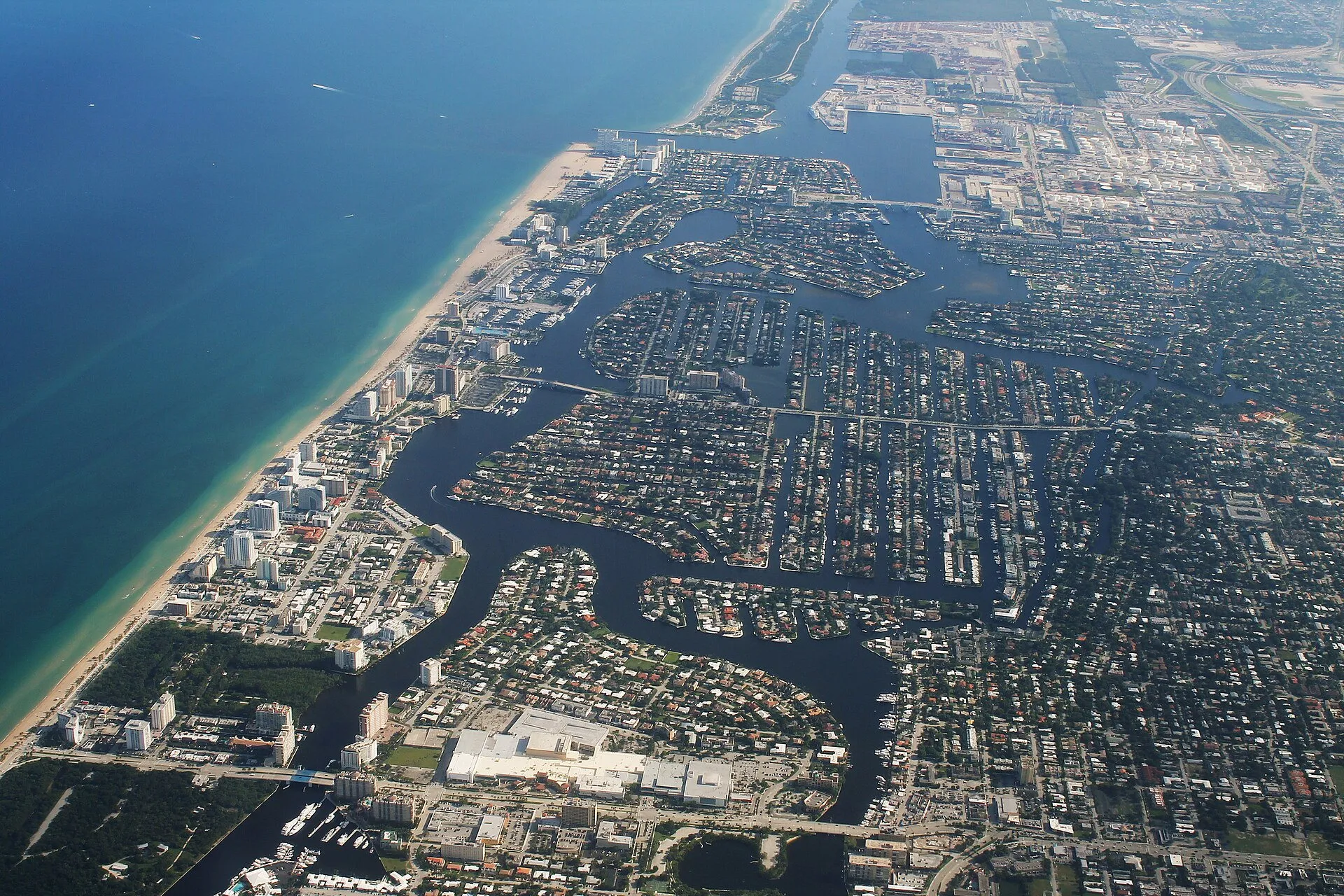

Intracoastal Waterway
The main channel running north–south behind the beaches, busy with recreational and commercial traffic. Deep water is accessible but wake is constant, and structures here are built with that in mind.
Duval County · Northeast Florida
Jacksonville Dock Builder serves the beaches communities of Duval County — Jacksonville Beach, Neptune Beach and Atlantic Beach — building and repairing docks, boat lifts and waterfront decks on the Intracoastal Waterway, Pablo Creek and the canal systems behind them.
County
Duval County
Primary waterways
Intracoastal Waterway · Pablo Creek · Isle of Palms and canal frontage · Tidal creeks and marsh behind the dunes
ZIP codes served
32250 · 32266 · 32233 · 32227
Local water
No two shorelines in Northeast Florida behave the same way. These are the conditions we design around here.
The main channel running north–south behind the beaches, busy with recreational and commercial traffic. Deep water is accessible but wake is constant, and structures here are built with that in mind.
A tidal creek paralleling the Intracoastal with marsh edges, soft bottoms and good shelter. Popular for smaller craft and for floating platforms.
Dredged residential canals with bulkheaded banks, limited width and typically good depth close to the seawall. Design here is governed more by canal width and neighbour clearance than by reaching depth.
The band of marsh between the barrier island and the Intracoastal, crossed by narrow creeks. Elevated walkways are usually required to get anywhere useful.
Waterfront in the beaches communities comes in three distinct forms, and what you can build depends almost entirely on which one you have.
Canal lots — the Isle of Palms system and similar — have bulkheaded banks and generally adequate depth right at the seawall. Reaching water is not the problem. The constraint is horizontal: how far a structure may project before it narrows the canal, and how close it may sit to the neighbouring riparian line. On a narrow canal those two numbers can leave surprisingly little room, and they determine whether a terminal platform, a lift or both are feasible.
Intracoastal frontage gives you access to the main channel with reasonable depth, at the cost of constant wake and full exposure. The design question is less about length and more about orientation and robustness.
Creek and marsh frontage behind the island is sheltered and shallow, with soft bottoms. Here the structure gets long, the walkway does most of the work, and floating platforms often make more sense than pushing a fixed dock further out.
Between full ocean salinity, persistent onshore wind and salt spray reaching well inland of the dune line, the beaches are the most corrosive environment we build in locally.
That shows up at the connections long before it shows up in the timber. Under-specified fasteners loosen, joist hangers streak and weaken, bolts seize and then fail. A structure can have perfectly sound framing and be coming apart at every junction.
We default to stainless for structural connectors on beaches projects and we would push back on anything less. The cost difference across a residential dock is modest. The difference in how the structure feels in year seven is not.
A covered dock or a boathouse on an exposed barrier-island lot carries substantially more wind load than the same structure on a sheltered creek twenty miles inland. The roof is a sail, and the pilings have to resist what it catches.
That is not a reason to avoid a roof — covered structures are among the best things you can add to a waterfront property here. It is a reason to design it as a structural element from the pilings up, rather than as something added on top of a dock that was sized for a flat deck.
Beaches-area projects fall under the relevant municipality — Jacksonville Beach, Neptune Beach or Atlantic Beach — for building permits, alongside state environmental review and federal authorisation from the U.S. Army Corps of Engineers Jacksonville District for work in navigable waters. Canal properties frequently have additional local rules on how far structures may project from a bulkhead. We confirm what applies to your address before design.
Requirements change. Confirm current rules with the Florida Department of Environmental Protection, the St. Johns River Water Management District and the U.S. Army Corps of Engineers Jacksonville District, along with your local building department.
Jacksonville Beach answers
Canal projection limits are set locally and are usually expressed as a maximum distance from the bulkhead or as a proportion of the canal width, so that navigation down the middle stays clear. On narrower canals this can be the binding constraint on the whole design. It is the first thing we check on a canal lot, because it determines whether a terminal platform or a lift is even feasible.
Generally less than on the marsh-heavy corridors further north and south, because deep water is reasonably close on much of this frontage. The variable is the marsh band in front of your particular lot. We sound it at low tide rather than estimating from the bank.
Yes. Full ocean salinity plus onshore wind carrying salt spray makes this one of the more aggressive environments in the region for hardware. Stainless connectors are a sensible default here rather than an upgrade, and they are the difference between a structure that stays tight and one that loosens at every connection in a few years.
Often, yes, and canal lots are frequently good lift candidates because depth at the seawall tends to be adequate and the water is sheltered. The constraint is usually width — a lift takes up canal space and must stay within whatever projection limit applies.
Yes, across all three beaches communities and the Intracoastal frontage behind them, including the Queens Harbour and Pablo Creek areas.
Start your project
Tell us the waterway, what is there now and what you would like. We will come back with a clear scope.